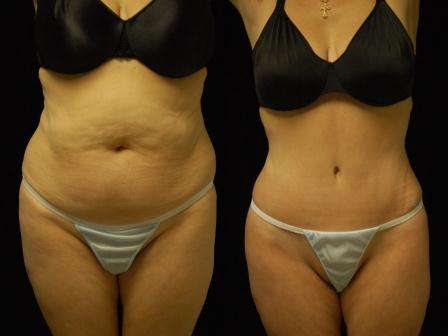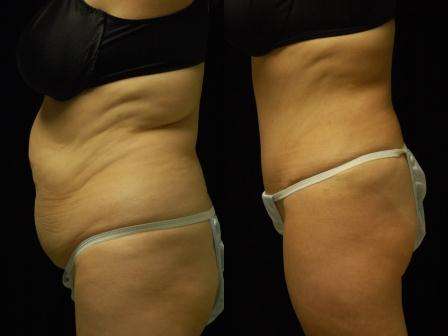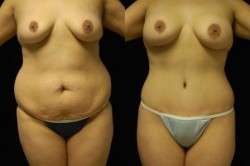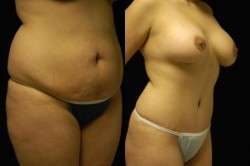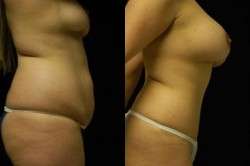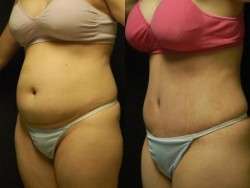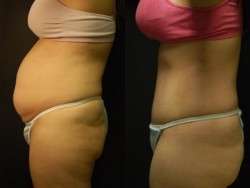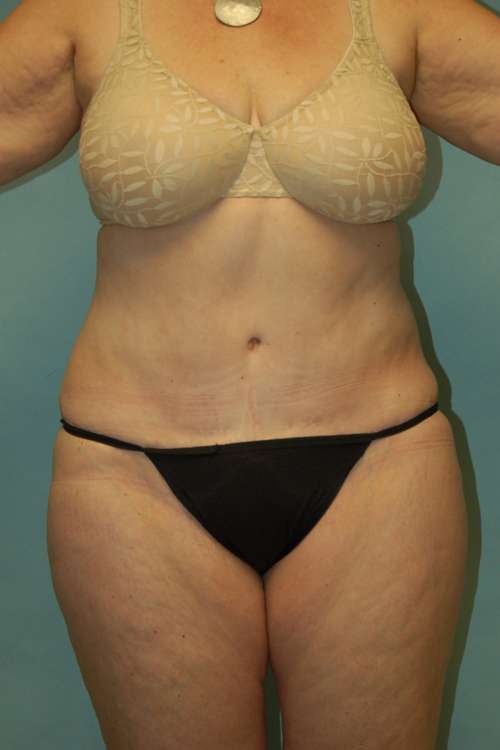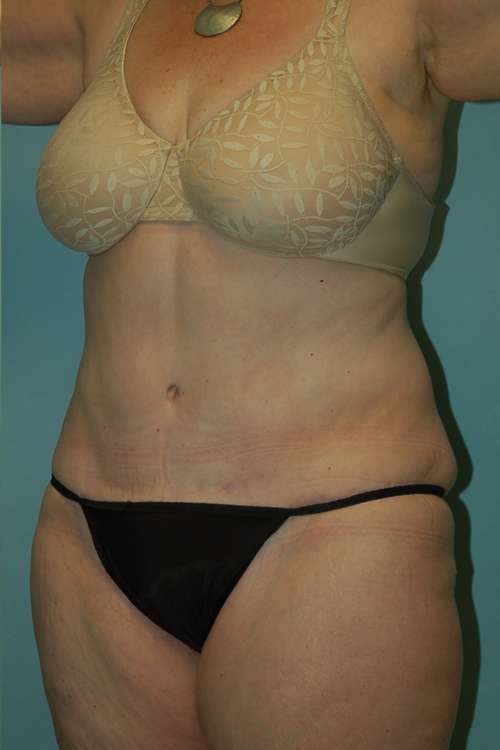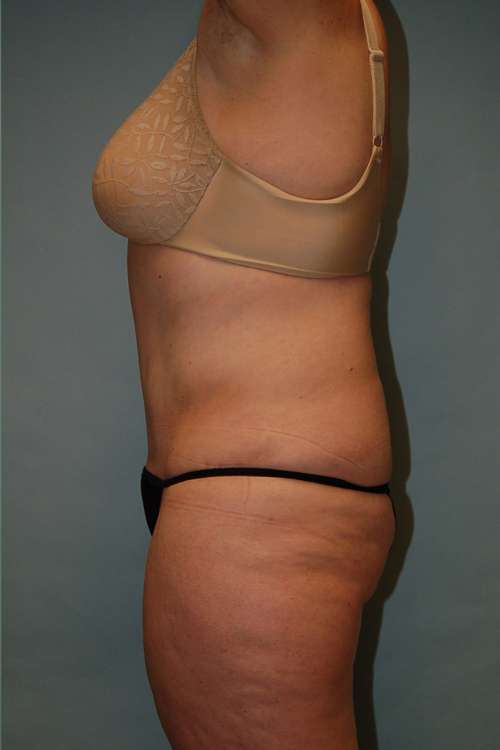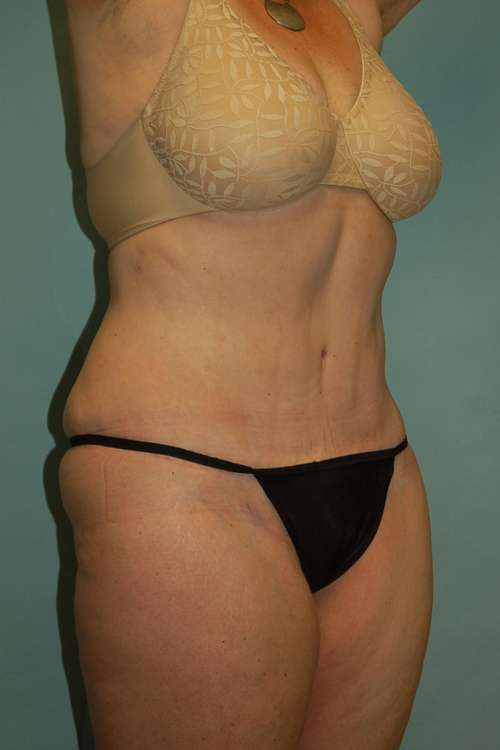

At An Enhanced You Cosmetic Surgery in Mountain View, Dr. Robert Lowen performs customized abdominoplasty, or tummy tuck, procedures to help his patients from San Jose, East Bay, and throughout Northern California achieve discreet, attractive cosmetic surgery results. Use the links below to learn more or contact our plastic surgery center to schedule a consultation today.
Abdominoplasty, or tummy tuck, is an operation to reduce unwanted excess or overhanging skin and fat and tighten the abdominal wall. The goal is to restore a slimmer profile and waistline. Different types of operations are done for different and increasingly severe types of tissue excess.
This technique is usually appropriate when skin is wrinkled or in excess in the lower abdomen only. There is usually lower abdominal wall laxity only.
If skin is wrinkled or in excess both in the lower and upper abdomen, the standard abdominoplasty is typically suggested. This also treats wrinkling above the umbilicus, excess fat as well as skin, and folds of skin and fat may overhang the lower abdomen.
An extensive abdominoplasty approach is used when there is excess and usually over-hanging skin in the lower abdomen and when excess girth extends around the waist which is poorly defined. It also treats significant laxity of the abdominal wall, below and above the umbilicus.
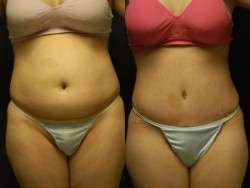
Dr. Lowen specializes in the "high-lateral tension" abdominoplasty at his San Jose area center. This exacting and time-consuming advance in body contouring surgery is the plastic surgery version of fine tailoring. The goal is to have not only a great looking abdomen and a slim waistline, but a scar that heals as a fine line, without the thickening, widening, or depression that occur commonly after less secure repairs with absorbable sutures.
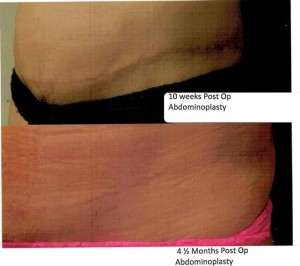
To picture how this tummy tuck procedure works, imagine a Chinese-finger trap. You put your fingers in and pull. As you pull the trap gets tighter and thinner in the middle. The body has a similar network of fibers called the superficial fascia, that can be used to transmit and hold this tension. By securing this fascia, which runs throughout the thickness of the abdominal fat, with permanent sutures placed so close together that you cannot get a finger between them, it is possible to restore a tight and youthful tone to the entire abdomen. This high-tension closure can be done without compromising tummy tuck scar quality, indeed it enhances scar quality. The technique also protects the blood supply to the lower abdomen by placing the tension laterally, and not in the vertical direction. The procedure achieves not only a tighter, pleasantly shaped abdomen, but a lifted and rejuvenated appearance of the pubic area and front of the thighs.

The high-lateral tension abdominoplasty can be combined with liposuction of the upper abdomen and flanks to obtain better definition of the waistline and a comprehensive sculpting of the area between breast and thigh.
{ Back to top }
Detailed tummy tuck recovery information is provided below. Patients can also visit our center serving San Jose, the East Bay, and surrounding areas to learn more.
After a mini tummy tuck procedure, moderate discomfort can be treated with oral pain medication. Patients should take care in movement for the first week, walking in a somewhat forward flexed position at the waist. Patients can expect more freedom of movement during the second week. Most are able to drive and move about fairly normally by the end of the second week, and should anticipate ten to fourteen days off work. No aerobic exercise is permitted for six to eight weeks. Additionally, home assistance is required for two full days.
Recovery after standard abdominoplasty surgery is the same as mini- abdominoplasty, but with up to one week longer downtime before returning to work or social activities. Home help should be available twenty-four hours a day for the first three days, and some patients may prefer a professional aftercare facility instead of home recovery.
This tummy tuck approach usually necessitates three weeks off work and social activities. Home help will be needed for the first five days, and it is often best to stay in an aftercare facility for the first three days.
Recovery after this procedure is the same as mini- abdominoplasty recovery.
{ Back to top }
Drains: fluid accumulates under the skin after tummy tuck surgery. This is true in many plastic surgery operations which elevate broad areas of tissue from underlying structures. It is necessary in abdominoplasty to have some way to remove this fluid during the healing process so the tissue will stick down to the abdominal wall. If not, the fluid will form a fluid cavity, called a seroma (se-rom'-a), that may grow a lining and require another surgery to remove. Drains are used to prevent this. The thin, flexible silicone tubes are placed under the abdominal flap and exit small incisions in the pubis. The drains are connected to silicone bulbs or reservoirs about the size of a pear. When the bulbs are squeezed and their stoppers plugged in, they create a suction that pulls fluid out of the body. They are left in for up to a week after abdominoplasty.
Fascia: the white, shiny, and tight, non-yielding fibrous tissue to which the thin sheets of abdominal muscle attach. The outer surface of the abdominal wall is fascia. Muscles in your arms and legs start by attachment to bone and end in tendons which also attach to bone. In the abdomen, the muscles may originate on the lower ribs, but have no bone to attach to, so they end up attached to the specialized anterior and lateral abdominal wall fascia. This joins in the midline as a tough midline structure.
Flap: a flap is the plastic surgery term for tissue which is raised from its bed on the body, but left attached so it has a blood supply to nourish it. The abdominal flap is the full thickness of skin and subcutaneous fat which is elevated from the abdominal wall. The incision is on the lower abdomen, so the flap is left attached to the upper and lateral abdomen. Blood supply is critical when creating the flap. Several sources of the blood supply of the abdominoplasty flap are interrupted by necessity during the elevation of the flap. The blood vessels which come out of the rectus muscle are cut, including the rich blood supply around the umbilicus. The remaining blood supply comes from the flanks and the area under the rib cage. Care in preserving more of this blood supply and placing tension on the flap, as described in the next section, makes the risk of skin loss lower.
High-lateral tension abdominoplasty: in this procedure, the location of the incision is very important because it determines both aesthetic satisfaction and the ability to wear bathing suits and underwear without having a visible scar. Older tummy tuck methods placed the scar right across the lower abdomen, and it was visible on the front of the thighs below the bathing suit line. As the fashions women wear get higher and higher in front of the thigh, no scar visibility is desired in this area.
The scar must go across the pubic area, but to hide it, it has to slant up at about a forty-five degree angle toward the waist. How long the scar is from the pubic area upwards is determined by how much excess skin and fat are present. Older abdominoplasty methods pulled the skin primarily in a downward direction. This puts all the tension at the pubic area. Tension on skin edges, if excessive, can compromise circulation, resulting in loss of skin or full-thickness loss of skin and fat at the pubic area. The technique of HLTA puts the tension on the upward slope of the incision. Minimal tension is placed at the pubic area. The tension is in an area with a more robust blood supply and the skin tension and removal is along a direction that leads to a more pleasing shape. The only minor disadvantage of this approach is that patients have increased swelling of the lower abdomen that lasts until the lymphatic drainage to the groin and umbilical areas regrows.
Liposuction: also suction-assisted lipoplasty, or SAL, for short, this procedure is performed to remove subcutaneous fat by inserting small metal tubes called cannulae (singular, cannula) through small skin incisions, passing these tubes, which have various kinds of openings at their blunt tips, back and forth in the fat, and removing the fat as it is broken up with a vacuum that pulls the fat out of the body. A cannula may be connected to a vacuum pump or hose, or to a special syringe which holds the vacuum. A wetting solution of dilute adrenaline and salt solution is always placed in the tissues before suction starts in order to minimize blood loss.
Rectus muscle: This is your main "sit-up" muscle. It is a vertical muscle, one on each side of the midline, that starts at the rib cage. It is reinforced by several horizontally-oriented fascial bands in the upper abdomen that are visible through the skin on someone with a "washboard" abdomen, and inserts at the pubic bone. It is enclosed in a fascial sheath, like a tube, going up and down.
Plicating: (pli'-cating) means to fold. The fascia of the abdominal wall is folded in with sutures to make it narrower in the desired dimension. Usually the rectus fascia is plicated to narrow the abdomen. The abdominoplasty sutures are placed in a vertical row from pubis to umbilicus and then to the upper abdomen if necessary. Although these sutures narrow the abdomen from side to side, and narrow the waist, the forward bulge is also reduced.
Superficial fascia: think about the old Chinese finger trap puzzle. You put a finger in each end and pull, the trap tightens and you cannot remove your finger. Such a network of interlacing fibers called the superficial fascia exists under your skin. It is utilized in the closure of the abdominoplasty to get long lasting support of the tissues and put the least tension possible on the skin. Minimal skin tension is a favorable condition for minimal scarring.
An incision is made in the skin around the umbilicus. The umbilicus is dissected free and left where it is, and the flap is elevated above it up to the rib cage. Care is taken to limit elevation of the flap to a narrow tunnel above the umbilicus to preserve as much of the blood supply in this area as possible. A tunnel is created to allow plication of the rectus muscle, and the excess skin is measured and removed. The excess fat in the lower abdomen is removed from the bottom of the flap and tapered to blend with the thinner, lower margin of the incision. After closure, the location of the umbilicus is confirmed, a vertical incision made, and the umbilicus retrieved and sutured.
If liposuction is necessary to enhance the tummy tuck results, it is usually done in the upper abdomen and to a limited extent in the flanks, keeping in mind that excess fat removal should not be done at the expense of blood supply. Sometimes a two stage procedure, with the liposuction done separately, is necessary or recommended for this reason.
{ Back to top }
Although this operation is called a tummy tuck, making it sound like a cute, minimal operation, it is major surgery. The main advantage is that it is a superficial operation only. There is no cutting through the abdominal wall or muscle, which would be needed for an abdominal hysterectomy, or a bowel operation. Therefore, the recovery is much quicker, and there is usually no interference with the ability to eat and drink immediately after surgery. During your tummy tuck consultation at our East Bay area center, Dr. Lowen can discuss the aspects of your surgery in further detail and answer any questions you may have about the procedure or recovery.
It is necessary to classify and describe common cosmetic abdominal problems exactly in order to decide what abdominoplasty operation subtype is needed. Here are the classifications and descriptions:
1) There is a bulging of the lower abdomen only as a result of simply getting gradually older or having one or more children, causing the muscle fascia covering the lower and lateral abdominal wall muscles to stretch out. If the only other problem besides the bulge is some extra fat, then endoscopically- assisted abdominoplasty can be done. This can be supplemented with liposuction.
The advantages of this approach are minimal incisions and faster recovery than more extensive procedures, but it also requires expertise with endoscopic techniques and special instrumentation, and is technically more demanding on the surgeon than making a larger incision for access. Additionally, if in the desire to avoid longer incisions the tummy tuck operation is performed on a woman with too much skin laxity, the results may disappoint. In order to get the maximum flatness and tightness of skin, excess skin must be removed, and a longer incision is necessary.
2) Mild to moderate bulging is accompanied by mild to moderate skin excess, with or without fat excess, but in the lower abdomen only. In this scenario, mini- abdominoplasty is appropriate. This means a limited incision, usually not more than halfway up the lateral aspect of the abdomen. If you put both hands on the front of your abdomen you will feel two points of bone, your pelvic bone, at the level of the umbilicus, but laterally, in line with your thighs. This is the point to which most incision lead. This point is called the AS IS, the Anterior Superior Iliac Spine.
In a mini-abdominoplasty, the incision is ideally limited to 1/2 to 2/3 the way from the pubis to the ASIS. The full-thickness of abdominal skin and fat is elevated off of the fascia up to the umbilicus, the fascia is plicated, and the excess skin pulled down, measured, and removed.
3) Moderate to extensive bulging of the abdominal wall above and below the umbilicus is accompanied by excess skin, usually overhanging the pubis, with or without excess fat. A standard high-lateral tension abdominoplasty involves elevation of the full-thickness flap up to the umbilicus to address these concerns.
4) Excess lax or overhanging skin of a marked degree can occur after massive weight loss. The problem is more extensive than just the abdomen and extends all around the waist. Depending on the extent, the incision for the contouring procedure must extend part or all the way around the waist. In an extended or extensive abdominoplasty the incision extends up and around the waist to some extent, usually well past the ASIS.
Sometimes a debulking procedure is performed, and refinement is not attempted. Undermining is limited and the main goal is simply to remove a massive, overhanging abdominal fat flap. These are hospital procedures and post-operative care in a professional facility is needed.
5) When there is great skin laxity, such as after massive weight loss, it is usually necessary to do a circumferential body lift. This is usually performed in stages, since it is so time consuming. It involves an abdominoplasty, and extending the incision around the waist until the incision meets in the back at the midline. The laxity of the buttocks and thighs is corrected by this procedure, and the abdominoplasty part of the procedure corrects the abdomen. Sometimes the medial thighs are also lifted by an incision in the groin crease. This is often done separately, but can be done in combination with an abdominoplasty.
The problem of skin laxity is not limited to people with massive weight loss. Many women are disappointed by the results of liposuction of their hips or thighs, not realizing that unless the skin is pulled up, it will not look smooth and tight. Simple removal of fat in this area corrects part of the problem, but residual bulges are caused by lax, hanging skin. If the problem is significant enough, it may be worth the tradeoff to accept incisional scars that go up and around the waist. If you are wondering if you would benefit from this type of circumferential body lift, hold the skin of your lateral buttock firmly and pull up, while you observe the effect directly and in a mirror. If this maneuver restores the desired contour, you may be a candidate for a lateral thigh lift or circumferential-type of body lift. If the problem is mostly fat, then liposuction should be sufficient.
{ Back to top }
Use the information below to learn about abdominoplasty risks or schedule a tummy tuck consultation at our center serving San Jose , the East Bay, and surrounding areas to discuss these factors with Dr. Lowen.
The necessary scar is probably one of the main reasons women put off having an abdominoplasty. With attention, the location of the scar can be placed out of sight when you are wearing most bathing suits, and depending on how extensive the problem is, may be suitably placed out of sight even for high-cut or french-line bathing suits.
If after analysis, it appears that a mini- abdominoplasty is possible, the scar will be shorter, and in the case of an endoscopically-assisted abdominoplasty, virtually non-detectable.
Closure of the abdominoplasty incision in the HLTA is done in a special and time consuming way. Permanent, but soft, braided nylon sutures are placed deep in the tissues to engage the supporting collagen network of the skin called the superficial fascia. Then another layer of smaller sutures is placed for support just underneath the dermis of the skin. Finally the skin is carefully repaired using absorbable sutures.
The scar heals as a ridge which gradually settles. This technique helps prevent the undesired risk of scar spreading or depression which is usually described as a risk of abdominoplasty scars. However, healing depends on individual factors, and a small percentage of people heal with excess scarring, even if the skin tension has been appropriate and the incision gently and precisely sutured.
For these patients, there are special aids to healing. First there is silicone gel sheeting worn over the incision for several months. This flattens the scar and decreases redness, by an unknown mechanism. Our practice uses commercially available sheets, costing about $50-70, which adhere to the skin and can be comfortably worn inside clothing. The sheets are shaped to fit the incisions, and usually last as long as treatment is needed. Our center also uses the Versapulse vascular laser which helps flatten and soften raised or red scars of any age. Several treatments at three to four week intervals are very helpful in improving scars.
The surgical term for swelling is edema. Edema is a normal consequence of surgery and indeed any injury as you know from the small bumps or injuries you may have had. It is not possible to look smooth and flat until the swelling has gone down. Since the incisions across the lower abdomen have interrupted the lymphatic channels leading to the collecting system at the groin, and the elevation around the umbilicus has likewise interrupted an important outflow tract in that area, swelling is prolonged.
It is important to wear a binder or girdle like garment to decrease swelling after tummy tuck surgery. The pressure from the outside helps decrease fluid accumulation until the lymphatics regrow. Also minimal activity initially, other than walking, limits edema. The lower abdomen will look puffy for four months and it will take about six months for things to really settle down and the tissues to soften to their normal state. Mini or endoscopically-assisted abdominoplasty will have a much shorter duration of edema, since the incisions are much smaller and there is less extensive undermining to produce edema.
There are commonly slight differences in the tummy tuck incision from side to side. Small irregularities in surface contour may occur and be noticeable in the post-operative period. These usually become much less apparent as healing progresses. Occasionally persistent differences in contour are treated by revisional surgery or by liposuction in the office operating room.
If it were possible to leave the umbilicus untouched during every tummy tuck procedure, that would be ideal. It is not possible to do that since the main goal of the operation is to smooth out the abdomen and remove excess skin. The umbilicus is a tethering point for the wrinkled or excess skin in the upper part of the abdomen, and unless that tethering is released, the esthetic goal will have to be compromised.
If the laxity or wrinkling of the skin of the upper abdomen or just around the umbilicus is minimal, a compromise may be possible. This involves cutting the umbilicus free of its attachment to the abdominal wall and letting it come down or "float" downward with the surrounding skin. As the flap is pulled down, the laxity above the umbilicus is corrected and the umbilicus is sewn back down about an inch lower. This works if the patient has a long waist and with lowering of the umbilicus the abdomen still looks natural. If the umbilicus has to come down too far, so that it does not look natural, then the float should not be done.
To keep the umbilicus in place, the skin around it must be moved. An incision is made around the umbilicus resulting in a vertical defect in the abdominal flap. If the defect comes down far enough when the flap is trimmed, it may be discarded. Otherwise it is repaired and results in a small vertical scar.
The umbilicus is a remnant of the nutritional vessels of the fetus. It is a depression, with a scar at its deepest point and skin pulled down like a funnel into that depression. When the umbilicus is dissected free during the abdominoplasty, its blood supply can be impaired. This can result in skin loss, and the resulting wound healing secondarily. The end result will usually be acceptable, but if not, reconstruction can be done.
The closing of the end of the incision brings tissue together in a similar manner to the closing of a fan. The closure rotates around the end of the incision or the bottom of the handle of the fan. It is common in plastic surgery for such closures to result in some bunching of tissue at the end of the incision, commonly referred to as a "dog-ear." If a dog ear occurs, a revisional procedure is required. Usually small dog ears will flatten after several months and require no further surgery. If not, they are removed as an office procedure. Some lengthening of the tummy tuck scar is necessary to do this.
Emboli are uncommon risks which can occur in the post-operative period. Blood clots which may form in the legs can travel to the heart and impair circulation. Small fat particles or metabolic products of fat called free-fatty acids are thought to damage cell membranes in the lungs, causing fluid to accumulate. While there is no specific prevention for these conditions, precautions such as calf-compression devices are usually worn during surgery. Secondary symptoms would be shortness of breath, rapid heart rate, and chest discomfort. Treatment is medical, supportive, and directed at the underlying cause.
For more information on the abdominoplasty procedure, schedule a tummy tuck consultation at our San Jose and East Bay area practice. Contact our plastic surgery center today to get started.
{ Back to top }