An Enhanced You Blog Mountain View
Brachioplasty Trims Away Excess Tissue for Contoured Arms

Are your bat arms making you consider a brachioplasty? Do the sagging fat and loose tissues of your arm prevent you from wearing short sleeves? Put an end to your troubles by having a brachioplasty performed. Your underarm can begin to accumulate sagging skin and tissue for several reasons. It could be because of the […]
Give Your Wrinkles a Rest with Restylane

As we age, so does our facial skin. This is something that we cannot control. Unfortunately, all the telltale signs of aging show directly on the face. Other factors such as stress, sun, environmental pollution, external and physical elements, gravity etc. affect our faces, making us look much older than we actually may be. Cosmetic, […]
Get Botox Done During Your Lunch Break!

Botox is an injectable treatment that’s composed of a toxin that’s produced by a bacterium known as Clostridium Botulinum. While this may sound like something dangerous, fret not, because in the right hands, it’s actually a miracle worker. The toxin in Botox is used to relax the underlying muscle structures responsible for the formation of […]
I Want Bigger Breasts! Is Breast Augmentation for Me?

Breast augmentation is a safe way to improve the shape, size, and appearance of your breasts. These days, you have minimally-invasive, non-surgical techniques, particularly those involving augmentation through implants, which can help you augment your breasts without worrying about scars and extensive recovery. When Should You Consider A Breast Augmentation? When there is a visible […]
Feel More Comfortable Taking Your Shirt Off in Public with Male Breast Reduction

Are you a man with enlarged breasts or excess skin in the chest region? This is a condition known as gynecomastia and it is a problem that can make any man feel uncomfortable in their skin and cause them to feel insecure about their overall appearance. Many of the men who suffer from this condition […]
Is Your Butt Looking Flat?

A flat tummy is something all of us long for. But a flat butt?? That is a strict no-no! A lot of people want a well-toned and rounded buttocks that looks good in those nice pair jeans but sadly, not all of us are naturally blessed with such a butt. However, with the right help, […]
Rhinoplasty Surgery Gives Patients the Noses They Deserve
Everyone deserves a nose that is both fully functional and aesthetically pleasing. While some live their lives with pretty, properly functioning noses, not everyone is that lucky. Some people are born with noses that they consider to be too long, strangely angled, or abnormally crooked while others even suffer from breathing problems and defects that […]
When Oversized Breasts Cause Physical And Emotional Issues, A Breast Reduction May Be Needed

Even though large breasts are often portrayed and seen as an appealing feature to have for women, the truth is that they are not as glamorous as they seem to be. Women with oversized breasts, especially breasts that are disproportionate to their body, know just how heavy they can be, causing various physical issues such […]
A Better Type of Mini Abdominoplasty
Abdominoplasty, commonly known as a tummy tuck is a procedure in which the excess fat and skin are removed from the abdominal region in order to tighten the stomach for a more defined look. A mini abdominoplasty is a tummy tuck in which a single, short incision is made just above the pubic line. This […]
The Proper Way to Use Latisse
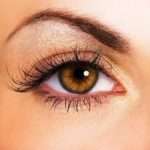
Having thin eyelashes and narrow eyebrows can ruin the appearance of your face. This is a common issue that many people face, but they often use makeup to make up for the lack of eyelashes or eyebrows. This doesn’t always provide a natural look, however, so extra help must be acquired to get thick lashes. […]